Signs of Woodworm in Furniture and Antiques in Dublin Homes
How to Spot the Signs of Woodworm in Furniture
The main signs of woodworm in furniture are small round exit holes of 1 to 2 mm, fine gritty dust (frass) falling from those holes, crumbling edges on legs, drawer runners and backboards, and small brown beetles near the piece in late spring or summer. In Dublin homes, fresh clean holes and new dust mean the infestation is active.
Below we explain what each sign looks like, where on a piece of furniture to check, how to tell old damage in an antique from live beetle activity, and what to do next so the problem does not move into the floorboards and roof timbers of your home.
What Causes Woodworm in Furniture
Woodworm is not a worm at all. It is the larva of a wood-boring beetle, and in Irish homes the usual culprit is the common furniture beetle. The adult beetle lays its eggs in cracks, joints and the open grain of untreated timber. When the eggs hatch, the larvae bore into the wood and feed inside it for several years before they pupate near the surface and chew their way out as adult beetles.
That long hidden stage is why woodworm in furniture is often missed. Nothing shows on the surface until the first beetles emerge, and by then the larvae may have been tunnelling through the timber for three years or more. The exit holes you see are where adults have left, not where they went in.
Furniture is especially at risk when it has spent time somewhere damp. Pieces stored in garages, sheds, outhouses or a damp spare room take on moisture, and the beetle prefers timber with a higher moisture content. Softwood, plywood backs, drawer bottoms and the unpolished undersides of tables and chests are favourite targets because they have no varnish or wax to seal the surface.
The Main Signs of Woodworm in Furniture to Check For
Most infestations give themselves away through a combination of the signs below. One sign on its own can have another cause, so look for more than one before drawing conclusions.
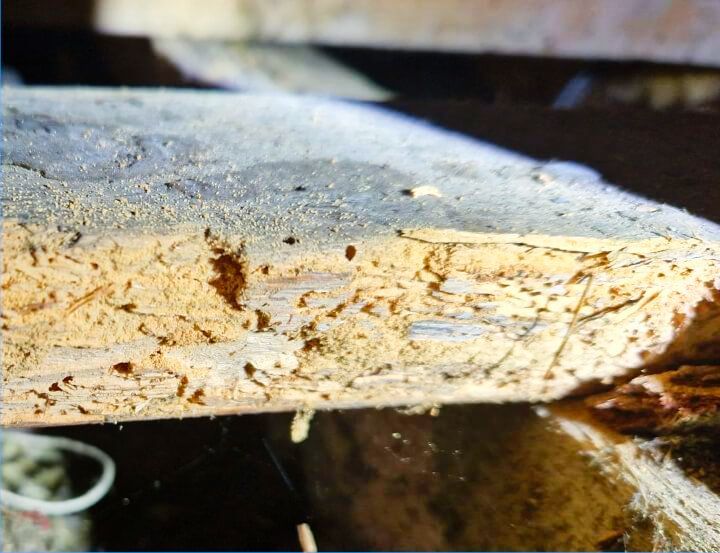
- Exit holes. Small, round holes about 1 to 2 mm across, usually in clusters. They are often on the back panel, inside drawers, under seats or on the feet rather than on the polished front.
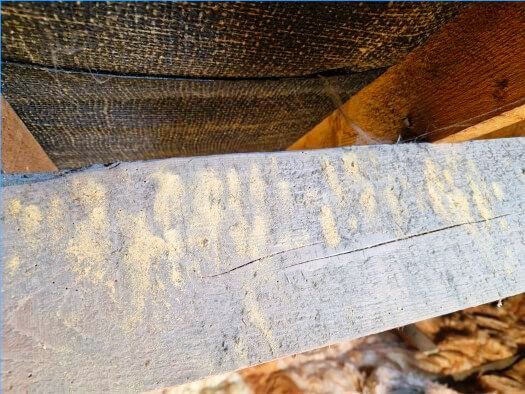
- Frass. Fine, gritty, pale dust made up of tiny pellets. It collects below the holes, on the floor under the piece or in the bottom of drawers. Frass feels like fine sand between your fingers rather than soft sawdust.
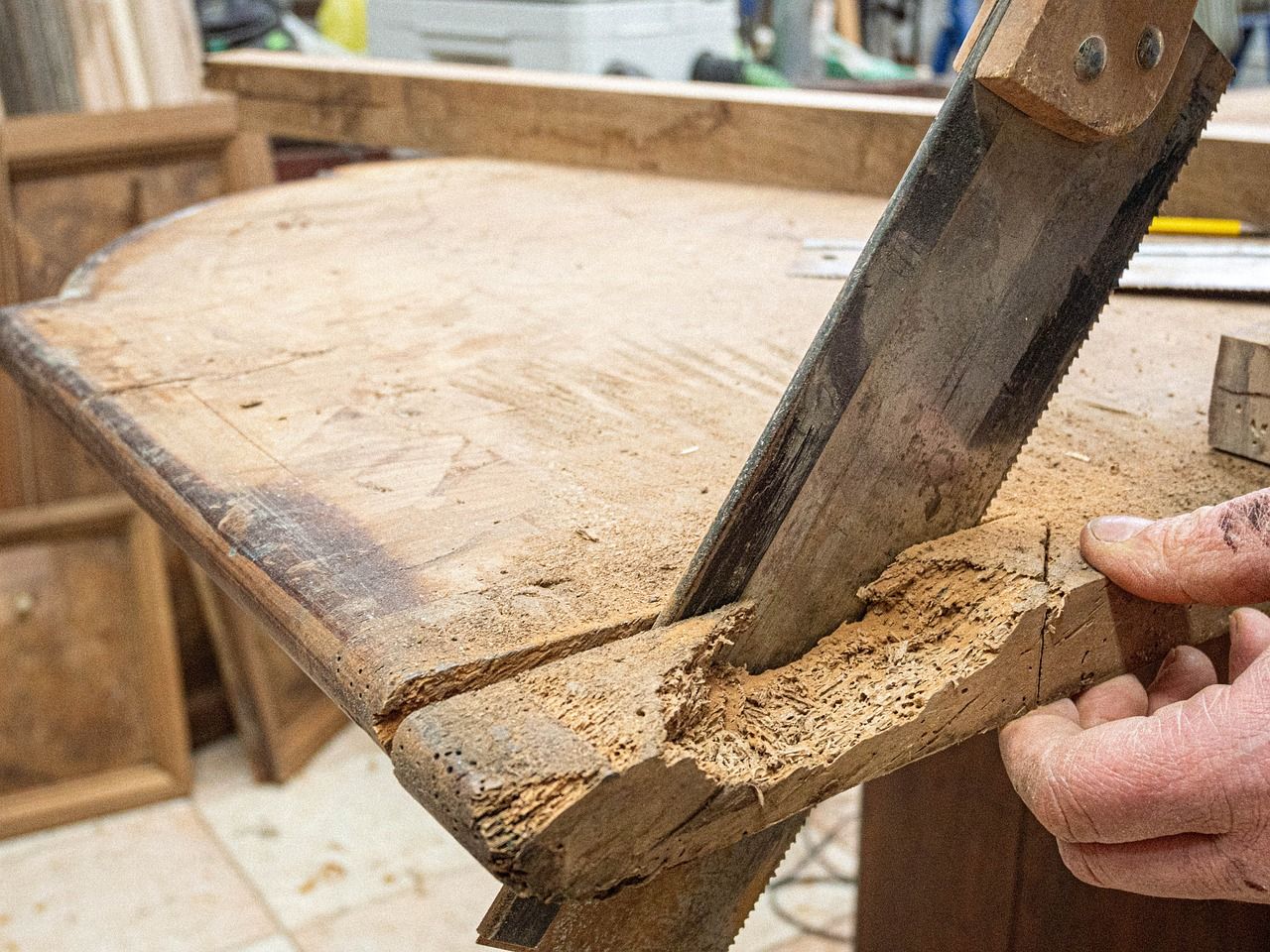
- Crumbling or weak timber. Edges that break away easily, drawer runners that have worn down, or legs that feel soft when you press a screwdriver tip against them.
- Tunnels under the surface. Where the surface has broken away you may see a network of small tunnels packed with frass.
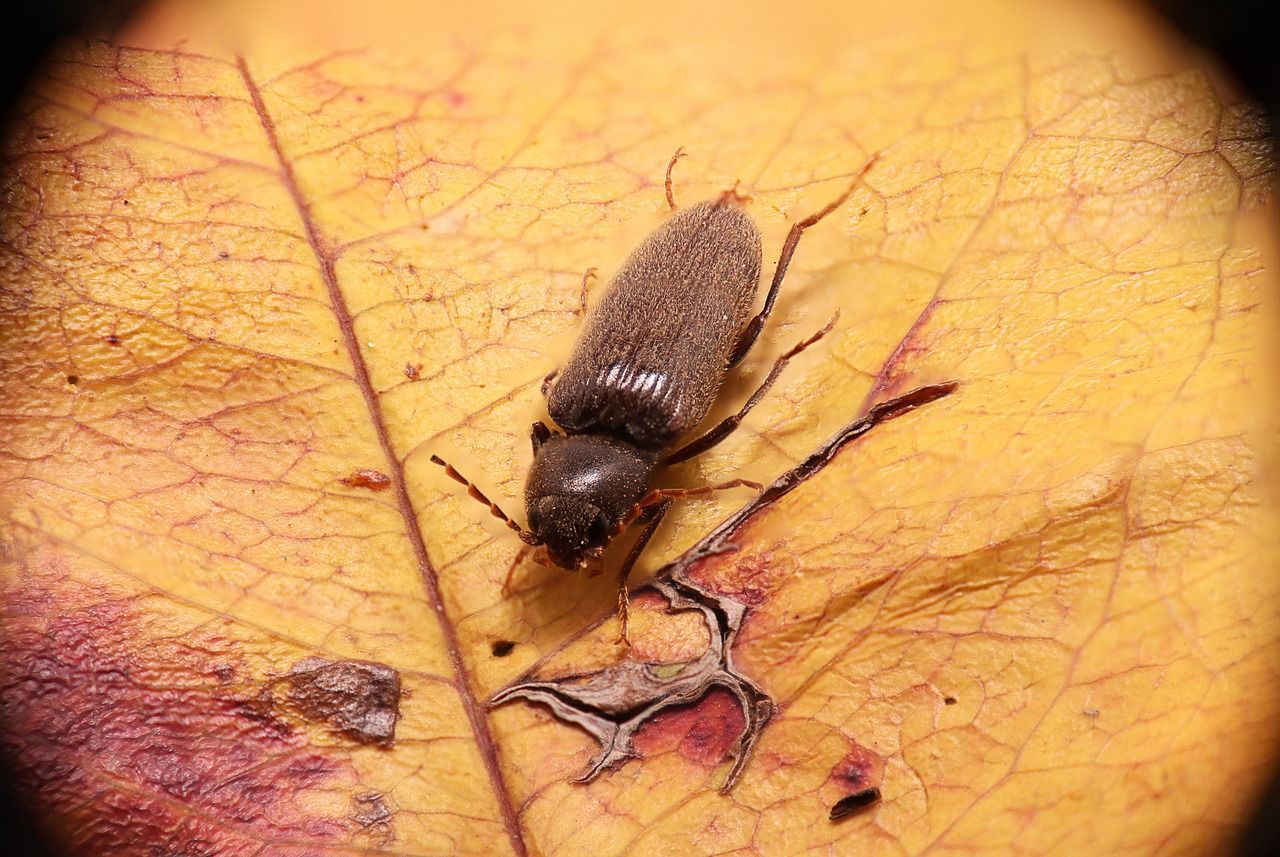
- Adult beetles. Small brown beetles, around 3 to 5 mm long, on or near the furniture or on nearby windowsills, mainly between late spring and the end of summer when they emerge to breed.
If you find frass on the floor but no holes, check the timber directly above it and any shelves or skirting behind the piece. The dust can drop some distance from where the holes are.
Woodworm in Antique Furniture and Old Damage
Many antiques in Irish homes carry holes from an infestation that died out decades ago. Old flight holes are not a problem in themselves, but they can make it hard to tell whether beetles are still at work. This is the single most important question with woodworm in antique furniture, because it decides whether anything needs treating.
Signs the woodworm is active
Active woodworm leaves holes with sharp, clean edges and pale, fresh timber inside. The frass is light in colour and builds up again after you clean it away. New holes appear over the following months, and you may see beetles in late spring or summer.
Signs the damage is old
Historic holes are usually dark inside, with rounded or dirty edges, and often contain wax, polish or dust from years of cleaning. There is no fresh frass, and the number of holes does not change over a full year. Furniture that has lived for a long time in a dry, centrally heated room is less likely to support active larvae, although that is not a guarantee.
We describe a simple way to monitor this in our article on checking for active woodworm. In short, clean the area, mark or cover the existing holes, and see whether new holes or fresh dust appear through the next emergence season.
Where to Look on a Piece of Furniture
Beetles lay their eggs where the timber is rough and unsealed, so the hidden parts of a piece are where the signs of woodworm in furniture show first. Take each piece away from the wall, use a good torch and work through it in this order.
- Pull out every drawer and check the bottoms, the backs and the runners they slide on.
- Turn chairs and small tables over and look at the underside of the seat or top, the rails and the feet.
- Check the back panel of wardrobes, chests, bookcases and dressers, especially if it is plywood or thin softwood.
- Look at joints, cracks and any old repairs, where the eggs are often laid.
- Check the floor and skirting boards under and behind the piece for frass and holes.
Pay particular attention to furniture that has recently come into the house. November is when many people bring pieces in from a shed or garage, collect furniture from a relative, or buy second-hand items and antiques ahead of Christmas. Checking a piece before it goes into a bedroom or sitting room is far easier than dealing with beetles once they have emerged indoors.
What to Do When You Find Active Woodworm
If the signs point to an active infestation, move the piece away from other furniture and, where practical, out of rooms with timber floors until it has been dealt with. Do not sand, fill or polish the holes first, as this hides the evidence you need to judge whether a treatment has worked.
For a valuable antique, speak to a furniture conservator before applying any product to the surface, because some finishes, veneers and gilding can be damaged by the wrong treatment. For everyday furniture with a small, contained infestation, the decision is often whether the piece is worth treating or should be removed from the house altogether.
The bigger concern for most homeowners is what the beetles have reached beyond the furniture. Adults that emerge from an infested chest or wardrobe can lay eggs in floorboards, joists, stairs and roof timbers. If you have found active woodworm in furniture, check the floor around it and look in the attic as well. Our page about woodworm explains how the beetle spreads through a building, and our recent post on woodworm treatment cost in Dublin covers what affects the price if structural timbers need treating.
Woodworm Treatment in Dublin Homes
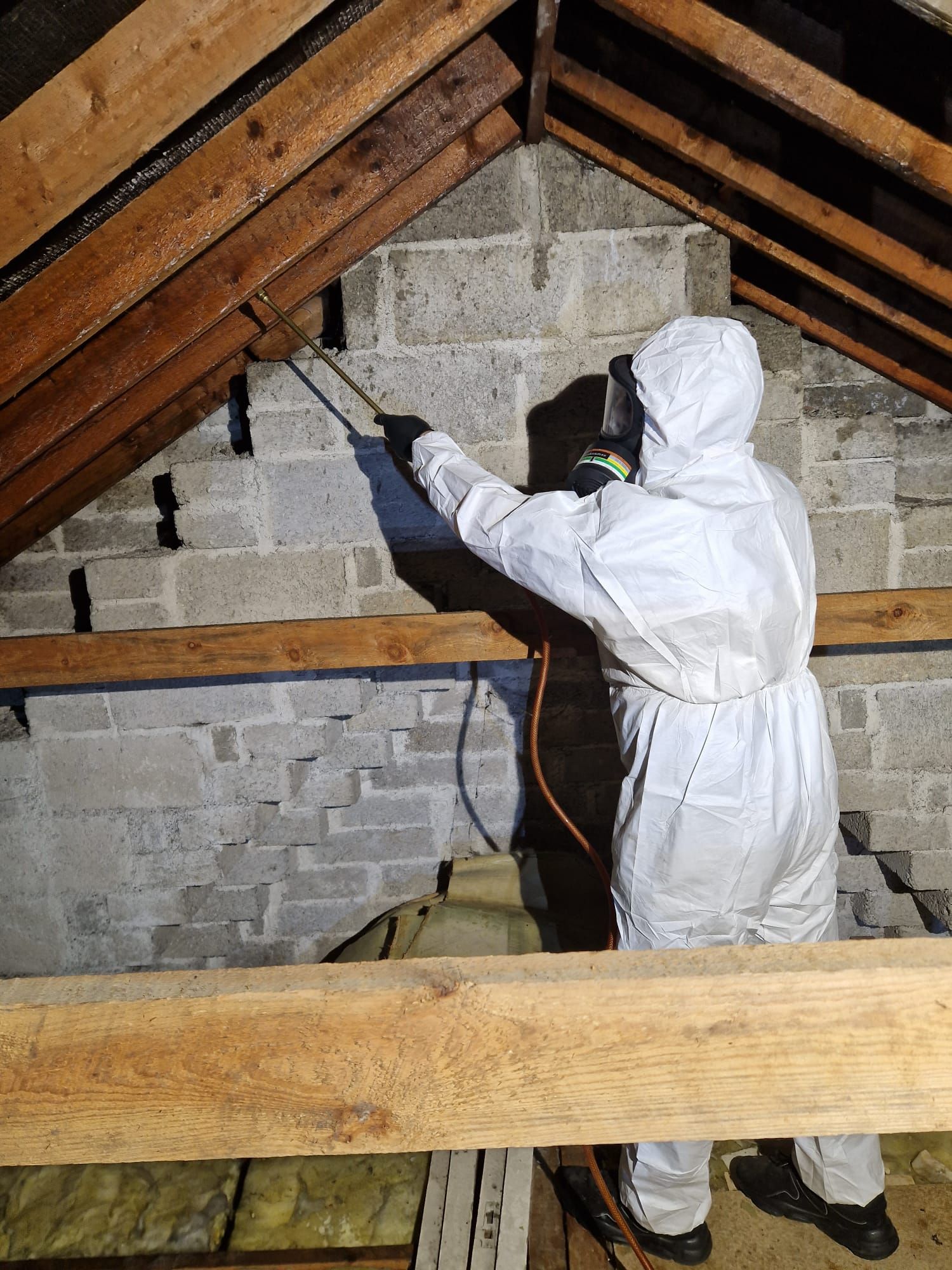
Where woodworm has moved into the timbers of a house, a small infestation should be treated before it spreads further. We use a water-based, high-pressure woodworm treatment system on attic and roof timbers and other structural timber, and we take care to keep you, your family and your pets safe while we resolve the problem as quickly as possible.
You can read more about how we work on our woodworm treatment page. With a few short questions we can give you an estimate over the phone, so it helps to note where you found the holes and frass, roughly how many holes there are, and whether you have seen any beetles.
The signs of woodworm in furniture are easy to miss but simple to check for: clean round holes, fresh gritty dust and weak timber on the hidden parts of a piece. Check any furniture coming into your home this winter, and if you find live activity, have the floors and attic checked too. We cover homes across Dublin and the surrounding counties.
If you have found signs of active woodworm, contact OnGuard Pest Control for a free estimate over the phone. Call us on 01 503 7787 or email info@onguardpestcontrol.ie.
You might also like